2025 Hyundai Kona
Our VerdictThe 2025 Hyundai Kona is a tech-savvy, stylish subcompact SUV that delivers big value in a small package. A recent redesign made it roomier and more futuristic inside and out. It’s packed with features and safety tech for the price, and its long warranty adds peace of mind. The one drawback: the base engine’s power is merely adequate, so the available turbo is the better pick for pep.
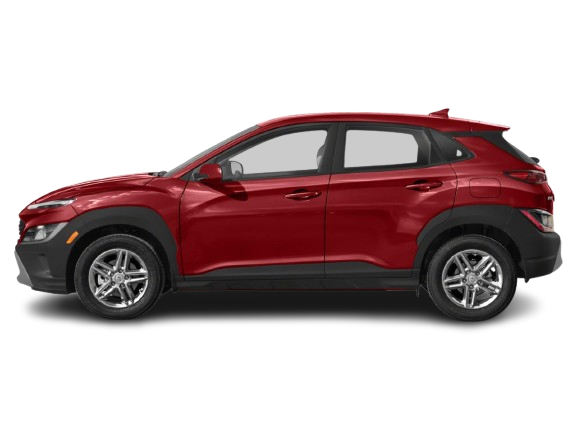
Tech-Lovers, Commuters
Speedsters, Off-Roaders
The Case For
- Futuristic exterior design that stands out,
- Roomier interior than before with high-tech dual displays
- Long 10‑year/100,000‑mile powertrain warranty (plus 3 years free maintenance)
- Long warranty coverage and strong value
Considerations
- Base 147‑hp engine is underpowered
- Upper trims get expensive (over $32K)
- No hybrid option available
- Some hard plastic interior trim in places
Who It's For
The Kona is Hyundai’s pint-sized SUV built for drivers who want the benefits of an SUV in a city-friendly size. This second-generation Kona stands out with a bold, futuristic design and an interior that looks like it came from the future (dual 12.3-inch screens and all). Despite its compact footprint, the Kona maximizes space; it’s now longer and wider than before. Five adults can fit in a pinch, but it’s most comfortable for four on longer trips. Tech is a major selling point: even the base model is loaded with modern features (think wireless phone connectivity and a big touchscreen) at a price that undercuts many competitors.

Choose Your Specification
SE
24,250Entry-Level Essentials
This base model is all about value for money. The SE may be the Kona’s most affordable trim, but it comes impressively well-equipped. You get the same 147-hp engine and smooth CVT as higher trims, along with Hyundai’s SmartSense safety suite standard (automatic emergency braking, lane-keep assist, etc.).
SEL
25,600Most Popular Trim
The SEL trim hits the sweet spot for many Kona shoppers; it adds welcome convenience features without a steep price jump. Building on the SE, the SEL upgrades the wheels to 18-inch alloys and adds useful touches like roof rails (for extra cargo like bikes or a kayak) and heated side mirrors with turn signals.
N Line
30,800Sporty Turbo Performance
The N Line is the Kona’s performance-flavored trim. Under the hood, it swaps in the 1.6L turbocharged engine with 190 hp. It also upgrades to an 8-speed automatic (replacing the CVT) with paddle shifters for a more engaging drive. It rides on 19-inch alloy wheels, wears unique N Line bumpers and a twin-tip exhaust, and even has red accents and badging that set it apart.
Limited
31,800Top-of-Line Luxury
The Limited is the Kona at its most luxurious and fully loaded. It combines the N Line’s powerful turbo engine and many sporty elements with additional high-end features focused on comfort and tech. The Limited is a bit more understated (no red trim or bold spoilers), but it still gets 19-inch wheels and a slick LED lighting setup.
- The SEL hits a sweet spot around the mid-$20K range. You get power driver’s seat, heated mirrors, dual climate control, etc.
- With the SEL you benefit from a larger digital gauge cluster, adaptive cruise control, and wireless phone charging
- Mid-level trims tend to hold their value well since they appeal to the widest range of used-car buyers
Trim by Trim
Select your car trims and compare them instantly
| Specification | SE | SEL | N Line | Limited |
|---|---|---|---|---|
| Engine Type | 2.0L 4-cyl (gas) | 2.0L 4-cyl (gas) | 1.6L Turbo 4-cyl (gas) | 1.6L Turbo 4-cyl (gas) |
| Horsepower (Driving Feel) | 147 hp @ 6200 rpm | 147 hp @ 6200 rpm | 190 hp @ 6000 rpm | 190 hp @ 6000 rpm |
| MPG (City/Hwy) | 29/34 (FWD); 27/29 (AWD) | 28/35 (FWD); 26/30 (AWD) | 26/32 (FWD); 24/29 (AWD) | 26/32 (FWD); 24/29 (AWD) |
| Seating Capacity | 5 people | 5 people | 5 people | 5 people |
| Cargo Capacity | 25.5 cu ft (63.7 cu ft with rear seats folded) | 25.5 cu ft (max 63.7 cu ft) | 25.5 cu ft (max 63.7 cu ft) | 25.5 cu ft (max 63.7 cu ft) |
| Transmission | CVT automatic | CVT automatic | 8-speed automatic (with paddle shifters) | 8-speed automatic |
| MSRP | ~$24,250 | ~$25,600 | ~$30,800 | ~$31,800 |
| Car Type | Subcompact SUV | Subcompact SUV | Subcompact SUV | Subcompact SUV |
The Cost of Ownership
Estimated annual and monthly ownership costs
Assumptions: These estimates are based on the average U.S. driver (12,000 miles/year, regular gas at ~$3.75/gal, a “good” driving record for insurance, and following Kia’s recommended maintenance schedule)
From Every Angle
Interior
4Spacious, High-Tech Cabin with Flair
The Kona feels surprisingly roomy and high-tech. The redesign stretched the wheelbase, so rear-seat legroom and cargo space improved notably over the previous generation. Four adults can ride comfortably (five in a pinch), which is commendable for a vehicle this size.
Safety
5Loaded with Tech, Top Safety Ratings
Every 2025 Kona comes standard with Forward Collision-Avoidance Assist (automatic emergency braking that detects cars, pedestrians, and cyclists), Lane Keeping and Lane Centering Assist, Driver Attention Warning, and Blind-Spot Monitoring with Rear Cross-Traffic Alert.
Exterior
5Bold, Futuristic Design Stands Out
The Kona’s bold new look immediately grabs attention in the subcompact SUV crowd. Hyundai gave it a futuristic front end with a slim full-width LED light bar. Sharp creases along the body and a floating roof design create a modern, youthful vibe.
Fuel Economy
4Respectable Efficiency, Easy on Gas
The Kona delivers fuel efficiency on par with—or better than—most rivals in the subcompact SUV segment. With the standard 2.0L engine and FWD, the Kona is EPA-rated at 29 mpg city / 34 mpg highway (31 mpg combined).
Tech & Infotainment
5Big Screens and Seamless Connectivity
Technology is one of Kona's strongest suits. Every gas Kona comes with a large 12.3-inch touchscreen infotainment system and impressively, Hyundai makes Apple CarPlay and Android Auto standard and wireless on all trims.
Performance & Handling
3Smooth Ride, Modest Power
The Kona is an easy and enjoyable daily driver. With the base 2.0-liter engine (147 hp), acceleration is adequate but not brisk. It’s perfectly fine for city driving but if you have a full load of passengers or like to be first off the stoplight, you may find it a bit underpowered.
New This Year
- Last year’s optional SEL Convenience package is now its own trim (SEL Convenience), and a sport-oriented N Line S trim joins the lineup
- A 64-color ambient interior lighting system is now standard on the upper trims (starting from N Line S and above)
- A new Ultimate Red Metallic exterior color has been added to the palette for 2025
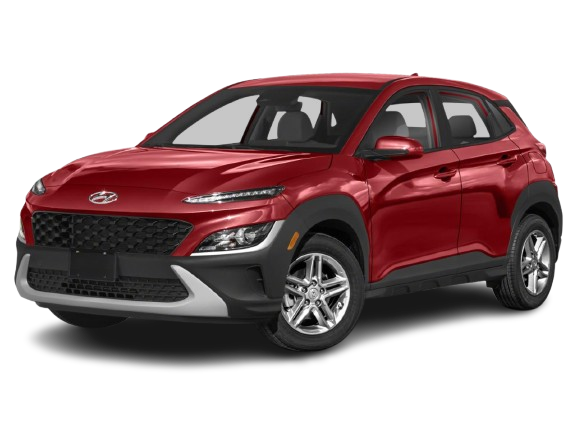
Cars similar to the 2025 Hyundai Kona
Let’s see how the 2025 Kona stacks up against two close competitors in the small crossover segment: the 2025 Honda HR-V and the 2025 Mazda CX-30:
2025 Hyundai Kona (FWD/AWD) 2025 Honda HR-V (FWD/AWD)
 2025 Mazda CX-30 (AWD)
| Aspect | 2025 Hyundai Kona (FWD/AWD) | 2025 Honda HR-V (FWD/AWD) | 2025 Mazda CX-30 (AWD) |
|---|---|---|---|
| Performance | 147‑hp 2.0L 4‑cyl base engine (smooth for city, but just adequate power) | 158‑hp 2.0L 4-cyl engine; modest acceleration (tuned for efficiency over speed) | 191‑hp 2.5L 4‑cyl engine standard gives more punch than Kona/HR-V |
| Tech & Interior | High-tech interior with dual 12.3” digital screens on upper trims | Simpler, more traditional cabin; analog gauges with a smaller 9” touchscreen | Upscale interior feel (best materials here, near-luxury finish); uses an 8.8” center display controlled by a console knob (no touchscreen) |
| Practicality | Surprisingly spacious for a small SUV; good rear legroom. | Good overall practicality: ~24.4 cu ft cargo behind seats | The smallest trunk of the trio; rear seat space is tighter, fine for kids or smaller adults |
| Comfort & Space | Front seats are supportive and offer a nice high driving position | The HR-V’s suspension is tuned for a cushy ride | A more driver-centric feel: the CX-30’s front seats are great for spirited driving |
| Who’s It For | Those who want a little bit of everything in a small SUV | Buyers prioritizing practicality and reliability | Drivers who value a premium feel and engaging drive |
| Best Choice For | Tech-focused drivers wanting advanced features. Those who want turbo + AWD in a small SUV. Buyers seeking a stylish yet practical daily driver. | Comfort-focused drivers wanting an easy daily ride. Those who prioritize space and long-term reliability. Buyers seeking a smooth, low-stress family SUV. | Drivers wanting a luxury feel in a smaller SUV. Those who value elegant design and engaging performance. Buyers willing to trade space for upscale style. |
Asked & Answered
Does the 2025 Hyundai Kona offer all-wheel drive?
Yes, all gasoline Kona trims (SE, SEL, N Line, Limited) are available with HTRAC all-wheel drive.
What warranty coverage does Hyundai provide for the 2025 Kona?
Hyundai backs the Kona with a 10-year/100,000-mile powertrain warranty and 5-year/60,000-mile basic warranty plus complimentary maintenance for 3 years/36,000 miles.
Is the 2025 Hyundai Kona comfortable for long drives?
Surprisingly, yes. The 2025 Kona is bigger than the previous generation; it’s a bit longer and wider.